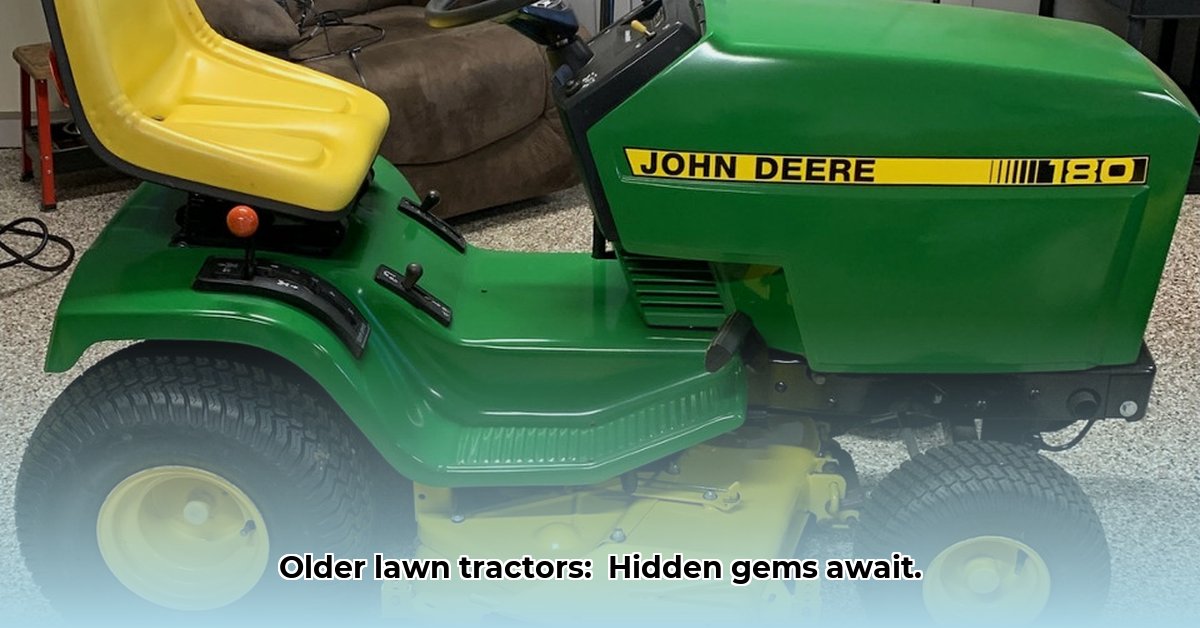
Why Collect Older Lawn Tractors?
Forget basic lawn care; older lawn tractors offer a unique blend of history, craftsmanship, and surprising investment potential. Think John Deere, Simplicity, Wheel Horse—iconic brands whose models have seen significant value appreciation, some even averaging an 8% annual increase! This surge in popularity stems from limited supply, increased collector demand, and the undeniable coolness factor of owning a piece of well-engineered machinery. But is this hobby the right fit for you? Let's delve deeper. For more on large vintage tractors, check out this helpful resource: Old Tractor Info.
Navigating the World of Vintage Lawn Tractors
The vintage lawn tractor market presents both opportunities and challenges. While demand is high for specific models, sourcing replacement parts can be difficult, as many original parts are no longer manufactured. This directly impacts restoration costs and limits restoration possibilities. Mechanical aptitude is also beneficial, further narrowing the pool of potential buyers. Economic fluctuations (inflation, recession) can also significantly influence market trends, introducing an element of unpredictability.
Is Investing in an Older Lawn Tractor Right For You?
Before committing, ask yourself crucial questions: What's your budget? Are you mechanically inclined, or will you require professional assistance? Can you dedicate the necessary time? Restoration, while rewarding, is time-consuming. Remember, not every older tractor guarantees financial returns; some may never recoup your initial investment. A thorough pre-purchase inspection, ideally by a qualified mechanic, is essential to identify potential issues like rust, broken parts, and engine problems.
Picking the Perfect Older Lawn Tractor
Experience significantly impacts success. Beginners should prioritize models with readily available parts from established brands. Long-term, investing in specialized tools and learning skills like 3D-printed part creation could significantly benefit your endeavors. Engagement with the collector community—online forums, shows, networking—is invaluable; knowledge is power in this field.
Keeping Your Tractor in Top Condition
Proactive maintenance is paramount. Regular oil changes, diligent cleaning, and proper storage extend lifespan and maintain value. Restoration, a test of patience and skill, presents numerous unexpected challenges. While intensely satisfying, substantial time and financial investment are required.
What Does the Future Hold for Vintage Lawn Tractors?
Market dynamics are constantly evolving. Emerging trends include increased parts reproduction and improved online access to parts. However, the rise of new technologies like robotic mowers could impact long-term demand, requiring careful consideration. The future remains somewhat uncertain.
Your Action Plan for Investing in Older Lawn Tractors
- Thorough Research: Investigate model values and market trends before purchasing.
- Community Engagement: Join online forums and attend events to connect with other enthusiasts.
- Meticulous Inspection: Conduct a comprehensive pre-purchase inspection.
- Preventative Maintenance: Regular upkeep safeguards your investment.
- Continuous Learning: Acquire necessary mechanical skills for restoration projects.
Weighing the Pros and Cons
| Advantages | Disadvantages |
|---|---|
| Potential for value appreciation | High restoration costs |
| Engaging hobby with a supportive community | Difficulty sourcing parts |
| Owning a piece of history | Time-consuming restoration process |
| Potential for financial gain | Requires mechanical aptitude or expertise |
Investing in and restoring older lawn tractors blends passion, dedication, and calculated risk. While challenging, the rewards can be substantial for the dedicated enthusiast.
How to Source Replacement Parts for Vintage Lawn Tractors
Key Takeaways:
- Sourcing parts can be challenging, but rewards are considerable.
- Online marketplaces and forums are invaluable resources.
- Pre-purchase inspection is essential to avoid costly surprises.
- Original parts are premium-priced and may necessitate budgeting adjustments.
- Restoration is a gradual process, not a sprint.
The Thrill of the Hunt: Locating Vintage Tractor Parts
The journey doesn't end with purchase. Part acquisition is a treasure hunt—a puzzle, sometimes frustrating, yet always engaging. Where to begin?
Online Marketplaces: Your Digital Junkyard
Websites like eBay and Craigslist offer a wealth of parts and complete tractors. Exercise caution; verify compatibility and condition through detailed questioning and additional photos.
Specialized Suppliers: The Experts
For specific needs, dedicated vintage lawn tractor parts retailers offer specialized expertise and extensive catalogs. Online forums often provide leads to these suppliers.
Forums and Communities: Tap Into Collective Wisdom
Online forums provide a platform for shared knowledge and assistance. Don't hesitate to ask questions; these communities thrive on collaboration.
Original vs. Aftermarket Parts: A Balancing Act
Original parts offer authenticity and quality, but cost more. Aftermarket parts are a cost-effective alternative, but always verify compatibility and quality.
The Art of the Deal: Negotiation and Patience
Negotiate prices, especially for bulk purchases. Patience is key; sourcing desired parts may take time. Network building with suppliers and community members pays dividends over time.
Beyond the Parts: Preventative Measures
Proper maintenance and storage minimize future part needs, ultimately saving time, money, and frustration.
A Final Word: The Reward
Restoring a vintage lawn tractor transcends mere mechanics; it's a journey of learning, problem-solving, and community connection. The effort is rewarded by the immense satisfaction of reviving a piece of history.